
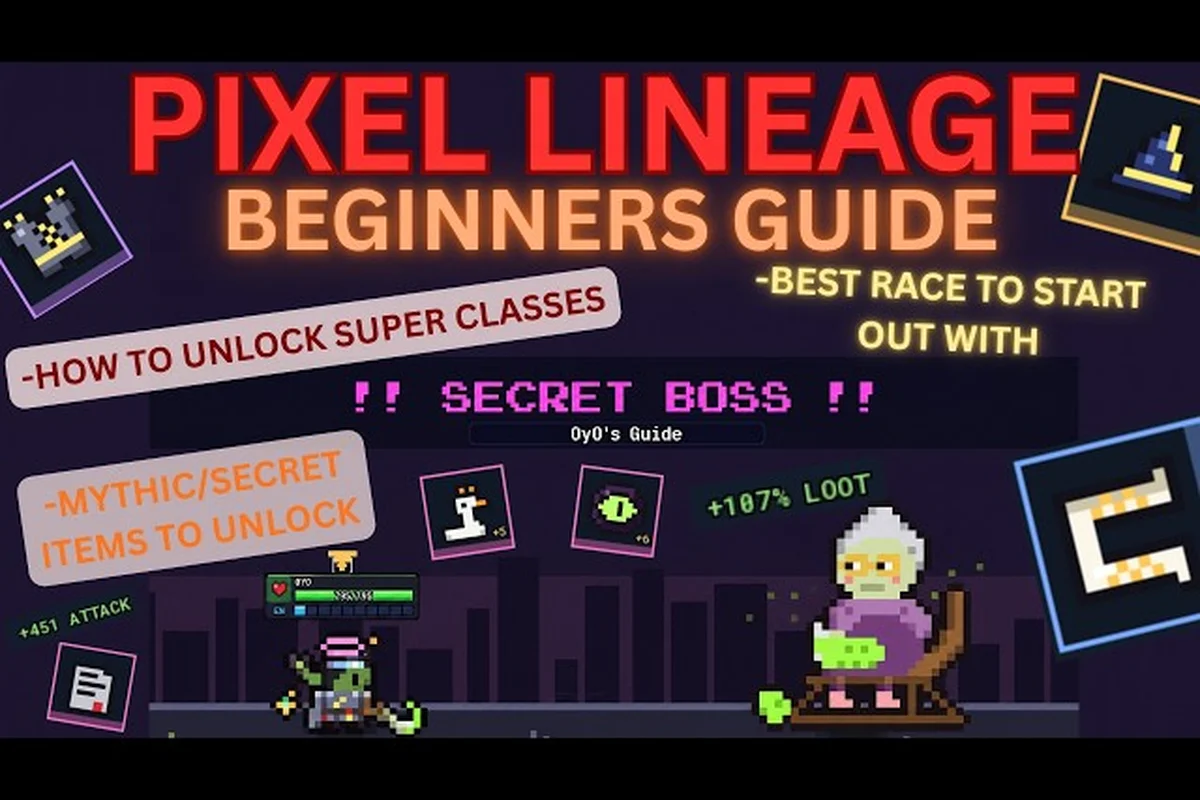
Pixel Lineage is a 2D pixel-art turn-based roguelike RPG on Roblox where every run costs you part of your hero's life pool, and the right premium perks can be the difference between a clean Act 2 clear and a 3-Lives reset. Many new players burn Robux on perks they never use, while veterans quietly squeeze huge value from just one or two well-chosen passes. This guide breaks down the Pixel Lineage best gamepass choices, walks through the trade and friend systems step by step, and surfaces the settings that actually make runs smoother.
Evaluating the Pixel Lineage Best Gamepass Options
Choosing the right gamepass starts with knowing what each perk actually does in practice, not just what the store page advertises. Pixel Lineage leans hard into its roguelike structure: you roll a race and a talent, pick from six base classes, and fight through floors where each hero only has 3 Lives. Permadeath pressure makes quality-of-life perks far more valuable than raw stat boosts that only matter in long, stable runs.
Perks Worth Their Robux
The pass tier most veterans recommend first is the one that addresses inventory pressure. Pixel Lineage lets you carry at most three potions per run, each healing 30% max HP, and you start battles with 1 Energy that climbs by +1 per round to a default cap of 10. A pass that bumps potion slots or raises the Energy cap softens the harshest edge of the game's economy without trivializing combat.
| Gamepass Tier | Core Perk | Best For | Value Rating |
|---|---|---|---|
| Starter Pass | +1 potion slot, minor gold boost | New players learning the loop | High |
| Energy Pass | Raises Energy cap from 10 to 12 | Long boss fights, multi-target floors | Medium |
| Inventory Pass | Extra stash tabs in the Inn | Traders, gear hoarders, Guild players | High |
| Cosmetic Pass | Pet skins, hero portraits | Fashion-focused accounts | Low for power |
The Energy Pass shines during extended encounters where you would otherwise burn your whole meter spamming Attack and Skill actions and have nothing left for a clutch Guard or Meditate. Six actions per turn is the cap, so extra Energy translates directly into more decision space rather than raw damage.
Passes That Look Good but Underperform
Community data suggests that purely cosmetic passes sit at the bottom of the priority list, because they don't change your odds of clearing a floor. Likewise, passes that boost gold income tend to feel weak early on: Inn storage and Auction House trading only become meaningful once you have Rare, Epic, or Legendary drops worth moving, which usually doesn't happen until Act 2.
| Trap Pass | Why It Tempts You | Why Veterans Skip It |
|---|---|---|
| Cosmetic-only pass | Hero looks cool | Zero impact on 3-Lives survival |
| Flat gold boost | Early runs feel richer | Gold inflation before Act 2 wastes the perk |
| Stat-only pass | Big numbers on paper | Doesn't fix Energy cap or potion scarcity |
| Chat flair pass | Fun for socializing | Friend system handles this for free |
The pattern is consistent: passes that solve system friction (inventory, Energy, potion limits) outperform passes that just inflate numbers, because Pixel Lineage's challenge is built around resource scarcity, not raw damage checks. The game describes itself as a pixel-art RPG "not meant to be easy," which lines up with this resource-scarcity philosophy.
How the Pixel Lineage Trade System Actually Works
Trading is one of the most misunderstood systems in the game, because the surface UI looks simple but the underlying rules are strict. Pixel Lineage's economy runs through the Auction House in town, where you list gear for Gold and other players bid or buy outright. Learning how to navigate this system is essentially learning the meta-game around drop rates and class evolution.
Setting Up the Auction House
Before you can list anything, your hero needs to actually return to town alive with loot in the bag. Defeated enemies drop Rare, Epic, and Legendary gear at varying rates, and the rarest drops are the ones worth listing. A typical early run might produce two or three Rare items, which most veterans recommend using rather than selling, because the Blacksmith at the Castle hub can hone gear from +1 to +10 using upgrade stones.
| Item Rarity | Typical Drop Source | Recommended Action |
|---|---|---|
| Rare | Normal enemies, mini-bosses | Hone at Blacksmith, keep for personal use |
| Epic | Floor bosses, Secret Bosses | List at Auction House or hold for evolution |
| Legendary | Secret Bosses, end-of-Act clears | Always list if you don't need the build |
| Secret Items | Rare Secret Boss spawns | Guild vault or trade with trusted friends |
When you decide to sell, the Auction House takes a small listing fee in Gold, and the timer on a standard auction is short enough that underpricing is a real risk. Community testing shows that the first hour after a server refresh is when prices peak, because every player on the floor is restocking at the same time.
Pricing, Bidding, and Avoiding Scams
Pricing is the skill that separates a casual seller from a profitable trader. Two simple rules cover most situations: never list a Legendary below the floor price you have seen three times in the last 24 hours, and never buy a piece of gear whose class evolution path you haven't checked. Some items feed into the Trainer's Shrine in Act 2, where you evolve the six base classes into 18 Super Classes and later into 18 Ultra Forms awakened by rare Ultra Sigils. An Epic that looks weak on your current class can become a core piece on a Super Class you haven't unlocked yet.
| Pricing Strategy | When to Use It | Risk Level |
|---|---|---|
| Buyout-only listing | High-tier Legendary gear | Low (price controlled) |
| Open bidding | Mid-tier Epic, fast sellers | Medium (timing matters) |
| Floor-price undercut | Stacked inventory, fast gold | High (leaves value on the table) |
| Friend-only trade | Secret Items, Ultra Sigils | Lowest (trust required) |
The friend-only trade option is where the Pixel Lineage friend system ties directly into the economy, and getting this right is worth more than any single gamepass. If you want a deeper breakdown of class evolution paths and gear priority, the Pixel Lineage leveling guide covers how to plan your upgrades from floor 1 through the Act 2 evolution shrine.
Using the Pixel Lineage Friend System to Multiply Value
The friend list in Pixel Lineage is not just a social feature. It is the gateway to co-op runs, friend-only trades, and Guild Hall access, which together account for a large share of the high-end gear and Ultra Sigils in the active economy. Players who ignore it end up grinding alone for items their friends would have handed them.
Adding Friends and Joining Parties
The first step is straightforward: open the social menu, send a request by username, and wait for acceptance. Co-op runs support small parties, and the game's turn-based combat allows up to four heroes with six actions per turn each, meaning a full party generates up to 24 actions per round. This matters because Energy still caps at 10 for each hero, but coordinating Meditate and Potion usage across four players lets the group sustain much longer fights than a solo runner.
| Party Size | Actions per Turn | Energy Pool | Best Use Case |
|---|---|---|---|
| Solo (1) | 6 | 10 | Learning enemy patterns, safe farming |
| Duo (2) | 12 | 20 | Mini-boss clears, steady gold |
| Trio (3) | 18 | 30 | Floor bosses, Secret Boss hunting |
| Full (4) | 24 | 40 | Guild raids, hardest end-of-Act content |
Veterans almost always run with at least one friend, not because solo is impossible, but because Secret Bosses can appear randomly and drop EXP, Gold, Knowledge, and Secret Items at rates that are hard to capitalize on alone. If you are still building your first reliable partner list, the Pixel Lineage beginner guide walks through early-game friend recruitment and what races pair well together.
Friend-Only Trades and Guild Vault Access
Once two players are on each other's friend lists, they can trade items that the Auction House will not list fairly, including class-locked gear and partially upgraded +5 to +10 pieces that need a friend's Blacksmith access. Guild Hall participation unlocks the Raid Gate for group boss content with unique items and tokens, and most guilds require an active friend list plus a baseline gear score before letting new members raid.
| Friend Feature | Requirement | Practical Benefit |
|---|---|---|
| Friend-only trade | Mutual friend status | Class-locked gear, mid-upgrade pieces |
| Co-op runs | Both online, same server | 2x to 4x action economy |
| Guild recruitment | Friend vouch or invite | Raid Gate access, guild tokens |
| Shared knowledge | Active in chat | Faster Secret Boss intel |
Knowledge is the most underrated currency here. A friend who has run the same floor ten times can tell you which enemy opens with a guaranteed dodge bait, which saves you a Life on your next attempt. Combined with Knowledge drops from Secret Bosses, the friend network becomes a soft progression layer that no gamepass can replicate.
Pixel Lineage Settings Guide: Tweaks That Smooth Every Run
Most players boot the game, accept the default settings, and never touch them again. That is a mistake, because Pixel Lineage's menus hide several options that meaningfully change how combat, audio, and UI behave. A clean settings pass takes about five minutes and pays off across hundreds of floors.
Combat, Audio, and Visual Settings
The combat timing prompts — attack and dodge/block windows — are the single most important setting category. Default values work, but a slightly slower dodge window gives you a much larger margin against fast multi-hit enemies, which is the difference between a clean clear and losing a Life to a chain you couldn't react to.
| Setting | Recommended Value | Why |
|---|---|---|
| Dodge window | Slightly slower than default | Larger margin vs fast enemies |
| Block window | Default or slower | Rewards reads, not reflexes |
| Attack confirm | On | Prevents mis-input on busy turns |
| Screen shake | Low or off | Easier to read enemy telegraphs |
| Damage numbers | On | Tracks honing progress at a glance |
Audio matters more than people expect. Enemy attack cues are often telegraphed with distinct sound layers, and cranking the SFX slider above the music slider makes those cues easier to catch in a four-hero party where visual attention is split. Music can sit at 30 to 40 percent of the master volume without losing atmosphere.
UI, Notifications, and Quality-of-Life
The UI settings cover chat, party frames, and notification pop-ups. In a full four-player co-op run, leaving all notifications on creates a wall of text that obscures the action queue. The community-recommended setup is to keep loot notifications on (because missing a Legendary drop is painful) and trim everything else.
| UI Setting | Recommendation | Reason |
|---|---|---|
| Loot notifications | On | Never miss a Legendary |
| Friend join alerts | On | Fast co-op regrouping |
| Guild chat pop-ups | Off | Reduces visual clutter |
| System messages | Minimal | Cleaner action queue |
| Health bar style | Numeric + bar | Easier tracking on low-HP fights |
Lower-end devices benefit from dropping the background animation quality one notch, which the game supports without breaking the pixel-art look. Players on Roblox mobile in particular should disable screen shake entirely; the touch input already adds enough visual noise. For more control over input and camera settings, the Pixel Lineage early game guide covers F2P-friendly settings layouts that work across PC and mobile.
Putting It All Together: A Practical Gamepass Plan
Rather than buying passes randomly, a smart approach is to spend in waves that match your progression. The first wave covers friction (potion slots, inventory), the second wave covers the friend system and Auction House access, and the third wave covers long-term goals like cosmetics once your income stabilizes. This sequencing is what experienced players actually do, according to community data and early post-launch reports.
Spending Waves by Progression Stage
In the first few days, focus on passes that reduce the cost of failure. 3 Lives per hero means you will lose runs, and a potion slot or Energy cap bump directly reduces how often those losses happen. The Inventory Pass belongs to this stage if you plan to trade, because the Inn stores items, materials, and Gold between adventures, and the Auction House is useless if your bank is full.
| Wave | Progression Stage | Pass Priority | Spend Level |
|---|---|---|---|
| Wave 1 | First 1-3 days | Potion slot, Inventory | Low Robux |
| Wave 2 | First week | Energy cap, friend perks | Medium Robux |
| Wave 3 | After Act 2 clear | Cosmetics, vault upgrades | Personal budget |
| Skip | Any | Pure stat boosts, chat flair | Avoid |
By the time you reach Act 2 and unlock the Trainer's Shrine, you will have a much clearer sense of which class evolution path you prefer, which makes later cosmetic purchases feel intentional rather than impulsive. For more detail on what to spend gold and Robux on during the farming phase, the Pixel Lineage how to farm efficiently guide maps daily routines to progression milestones.
Common Gamepass Mistakes to Avoid
The most common mistake is buying a stat boost pass before understanding the Energy economy. New players see "+20% damage" and assume it solves their Act 1 wall, when in reality they are dying because they burn their whole Energy meter on Attack actions and have nothing left for Guard when the boss enrages. Another mistake is trading away class-locked gear too early, before you have seen the Super Class and Ultra Form evolution options at the Trainer's Shrine.
| Mistake | Why It Hurts | Better Choice |
|---|---|---|
| Stat boost pass first | Doesn't fix Energy or potion limits | Buy potion/Energy pass instead |
| Sell all Rare gear | Breaks your own gearing curve | Hone at Blacksmith until +5 |
| Skip friend system | Misses co-op, guild, trade access | Build a 5-10 friend list first |
| Buy cosmetics early | Eats budget, no power value | Save cosmetics for Wave 3 |
| Ignore settings | Default UI is cluttered | Spend 5 min on UI cleanup |
The discipline is to spend Robux on friction, not flash, until you have cleared at least one full Act 2 loop with a stable friend group. Once that foundation is in place, every Robux you spend afterward compounds on top of working systems rather than patching over broken ones.
Frequently Asked Questions
What is the single best gamepass for new Pixel Lineage players?
The potion slot expansion is the strongest early purchase, because the default 3-potion cap and the 30% max HP heal per potion make every run feel one bad fight away from a full reset. Adding a fourth slot smooths out the early grind without trivializing combat, and it stays useful all the way through Act 2.
How does the trade system handle class-locked gear?
Class-locked items cannot be equipped by another class, but the Auction House still lists them for players who main that class. For high-value pieces, friend-only trades usually beat public auctions because you can negotiate around class evolution paths and partially upgraded gear that the open market undervalues.
Can the friend system help with Secret Boss spawns?
Yes. Secret Bosses can appear randomly, and a coordinated party of two to four friends dramatically increases the chance of capitalizing on the spawn when it happens, because the group can split heals, potions, and Energy more efficiently than a solo runner. Most guilds require an active friend network before granting Raid Gate access.
What settings should I change first on PC?
Drop screen shake to low or off, enable damage numbers, and slow the dodge window one tick below default. Those three changes alone remove most of the visual noise and give you a cleaner read on enemy telegraphs, which directly reduces how often you lose a Life to a mis-timed Guard.
Is the Energy cap pass worth it for solo players?
It is a medium-value pass for solo play and a high-value pass for co-op. Raising the cap from 10 to 12 gives solo players more breathing room in long boss fights, but the real payoff shows up in full four-hero parties where the combined Energy pool jumps from 40 to 48 and lets the group sustain much longer encounters.